
Hoke County Probate Court Role
North Carolina does not use a stand-alone county probate court for Hoke County. The elected Clerk of Superior Court acts as probate judge for estates and many related special proceedings. Elected clerks and assistant clerks hold most estate hearings and preside over most estate cases. That means Hoke County probate records are court records maintained by the clerk's office at the courthouse, even when the matter feels administrative rather than like a trial.
Probate covers more than filing a will. Hoke County probate files may include wills offered for probate, applications for letters testamentary or letters of administration, orders appointing a personal representative, bonds, estate inventories, accountings, creditor notices, year's allowance filings, small-estate procedures, guardianships, foreclosures, and special proceedings under clerk jurisdiction. If a will caveat challenges validity, the dispute can move before a Superior Court judge. For copies and local filing questions, the Hoke County Clerk of Superior Court is the main access point.
Hoke County Clerk of Superior Court
Probate judge for estates and special proceedings
304 N Main Street
Raeford, NC 28376
(910) 878-4100
Monday-Friday, 8:30 a.m.-5 p.m., excluding state holidays
The NC estates help topic explains how the Clerk of Superior Court serves as probate judge in each county.
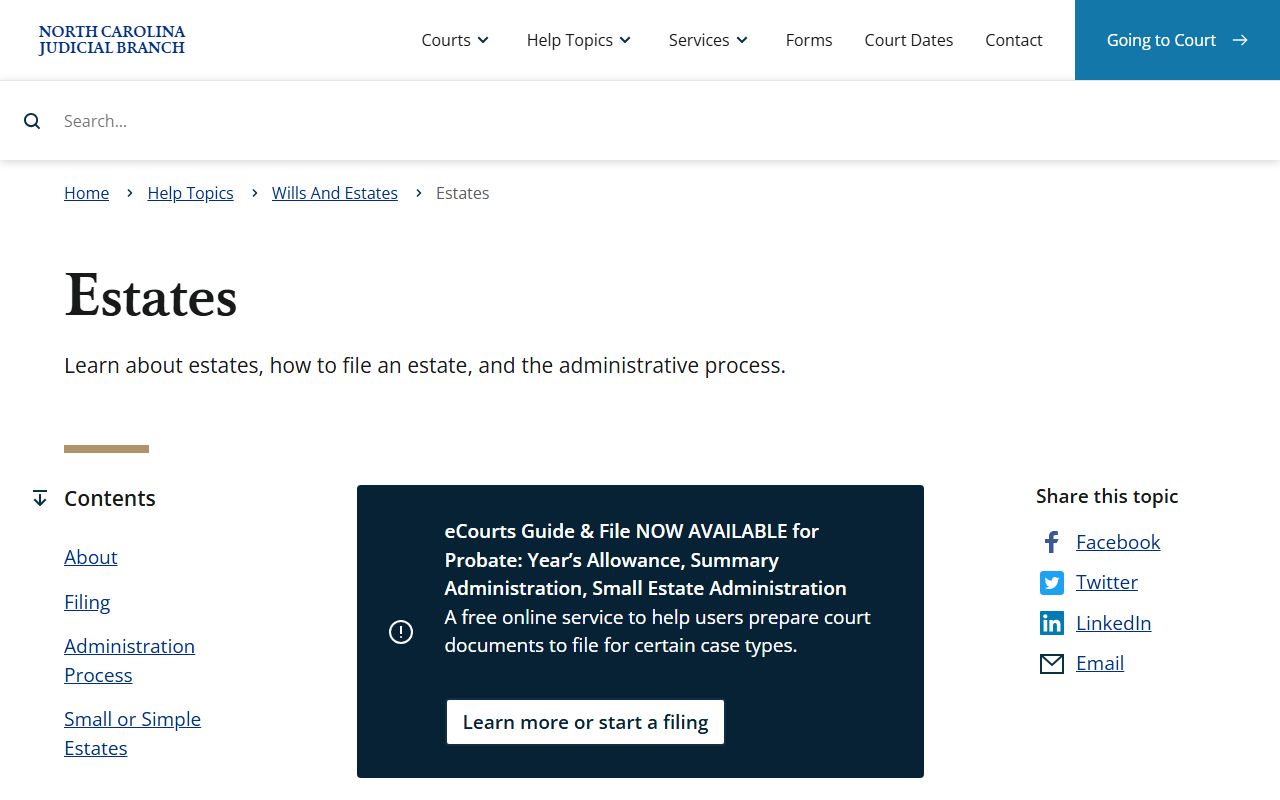
That state estates guidance matches Hoke County's local structure because probate is part of the clerk's court duties.
Hoke County Probate Terms
Probate records use words that do not appear in ordinary civil cases. These terms matter when reading a Hoke County estate file or deciding which clerk form fits the situation. The definitions below are short practical labels, not legal advice.
- Testator
- A person who made a will.
- Executor
- A person named in a will to carry out estate duties after appointment.
- Administrator
- A personal representative appointed when there is no executor or no valid will naming one.
- Intestate
- Dying without a valid will, so state succession rules guide distribution.
- Guardianship
- A clerk-supervised case for a minor or incompetent adult who needs a legally appointed guardian.
- Caveat
- A formal challenge to a will's validity that may move to Superior Court.
Search Hoke County Probate Records
Online probate access starts in the North Carolina eCourts Portal. Portal training says Smart Search includes civil actions, special proceedings, nonconfidential estates, and criminal actions under the clerk record statute. For Hoke County probate records, select Hoke County as the location when possible and search by decedent, estate name, personal representative, or case number. Portal is a strong first check for public, nonconfidential estate data, but not every probate document is public or online.
- Open eCourts Portal Smart Search and enter a record number or name, using the decedent or estate name if known.
- Use the location filter for Hoke County so statewide results do not hide the local estate file.
- Use case type, case status, and file date filters when the portal offers estate or special proceeding criteria.
- Review the case summary for file date, events, personal representative names, hearings, account due dates, and closure entries.
- Contact the Hoke County Clerk of Superior Court for older paper files, original wills, certified copies, or records that do not appear online.
Probate search is often name-sensitive. If a decedent used initials, a middle name, a married name, or a different spelling, the clerk can be more useful than repeated online searches. Older estates and original wills may exist in paper form even when the public portal has little or no visible detail.
| Field Label | Type | Required | Options or Format Notes |
|---|---|---|---|
| Smart Search record number/name | Text | Yes for basic search | Search decedent, estate name, personal representative, or case number. |
| Filter by Location | Dropdown/list | Recommended | Select Hoke County. |
| Case Type | Dropdown | Optional | Use estate or special proceeding filters if available. |
| Case Status | Dropdown | Optional | Narrows open or closed estates if available. |
| File Date Start / End | Date | Optional | Useful for older estates and timeline searches. |
Hoke County Estate Filing
A typical Hoke County estate starts when a family member or other qualified person gathers the will if one exists, a death certificate, asset and debt information, and the required Judicial Branch forms. The applicant contacts the Clerk of Superior Court if the decedent was domiciled in Hoke County or venue otherwise belongs there. The clerk reviews the filing, appoints a personal representative if appropriate, and issues letters that authorize the representative to act for the estate.
After appointment, the personal representative collects assets, gives required notices, handles creditor claims, files inventories and accounts, pays valid debts, and distributes remaining property under the will or intestacy rules. Routine estates may close in months, but contested heirs, real estate sales, creditor disputes, missing heirs, tax questions, and caveats can extend the timeline. Guardianships and other special proceedings use separate forms and hearing rules, so they should not be treated as ordinary estate files.
The NC Wills and Estates help topic is the statewide reference for Hoke County probate records and estate process questions.
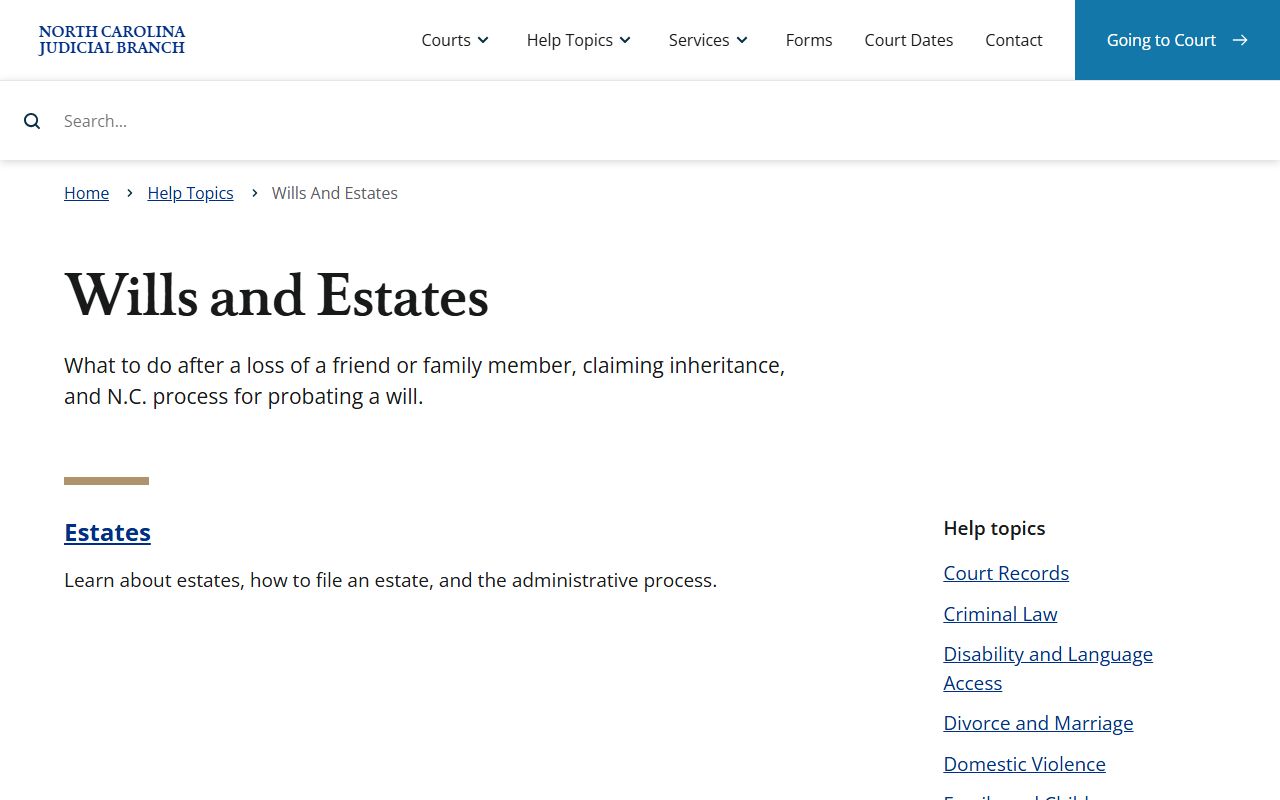
The wills and estates guidance supports local probate filings by linking users to forms, process explanations, and state rules.
Hoke County Probate Fees
Probate fees are controlled by the current North Carolina court cost schedules, especially the Estates Court Costs and Special Proceedings schedules. The Hoke local page does not restate each estate filing, reopening, inventory, accounting, copy, or certification fee. For that reason, a Hoke County probate records request should use the current statewide schedule and then confirm payment method with the Hoke clerk before mailing or visiting.
| Probate Item | Amount or Rule | Source Path |
|---|---|---|
| Estate filing fees | Current Estates Court Costs PDF controls | NC Judicial Branch current court costs |
| Special proceeding fees | Current Special Proceedings Court Costs PDF controls | NC Judicial Branch current court costs |
| Plain court copies | Miscellaneous court fees apply | NC Judicial Branch miscellaneous fees |
| Certified court copies | Current certification and copy schedule controls | NC Judicial Branch miscellaneous fees |
| Hoke counter payment | Cash or certified funds only | Hoke Clerk local payment rule |
Note: Do not mail cash to the clerk. Hoke court payment research supports money order or certified check for mailed court payments.
What Hoke County Probate Records Show
Public, nonconfidential Hoke County probate records may show the estate case number, county location, filing date, status, decedent or estate name, applicant, personal representative, attorney, and events. Event entries can include application filed, letters issued, inventory due or filed, account due or filed, notices, orders, hearings before the clerk or assistant clerk, and closure. If a caveat is filed, the estate record may show a will challenge or transfer to Superior Court.
| Field | What It Shows |
|---|---|
| Estate case number | The court identifier used for clerk and portal searches. |
| File date and status | When the estate opened and whether it remains active. |
| Decedent or estate name | The person or estate tied to the probate filing. |
| Personal representative | The executor or administrator appointed by the clerk. |
| Events and deadlines | Letters, notices, inventories, accounts, hearings, and orders. |
| Documents | Availability varies by public status, document type, and confidentiality rules. |
Restricted Hoke County Probate Records
Not every clerk proceeding is open in the same way. Guardianships for minors or incompetent adults may include sensitive medical, financial, or family information. Adoption records are confidential under N.C.G.S. 48-9-102. Mental health or incompetency-related filings may be restricted by law or court order. Public portal access should not be read as a full inventory of everything the clerk maintains.
When a record is restricted, the clerk may only release it to a party, attorney, authorized agency, or person with a court order or statutory right. Certified copies of public probate records are different from access to confidential filings. If a Hoke County probate record is needed for banking, real estate, title, benefits, or litigation, ask the clerk which certified document is appropriate before ordering multiple copies.
The North Carolina adoption confidentiality statute is one example of why some Hoke County probate-related records are not public search material.
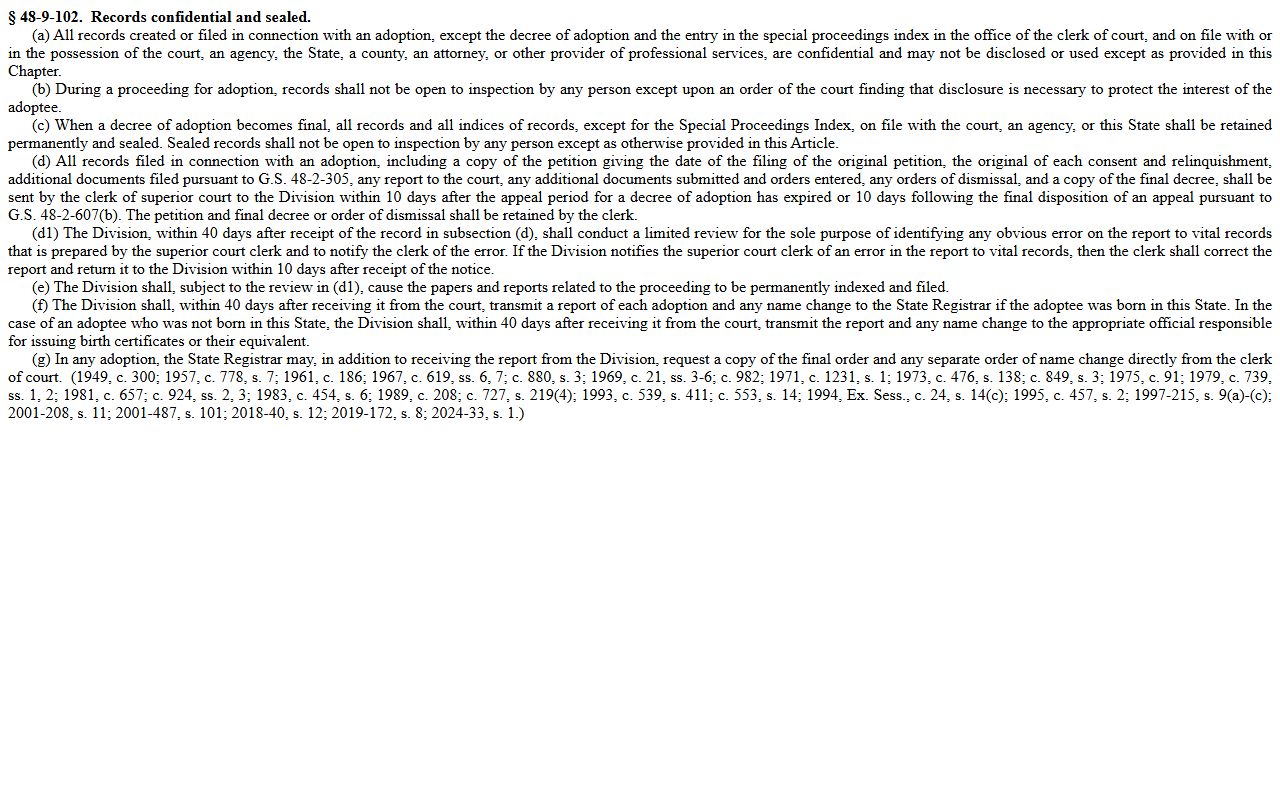
That statute illustrates the boundary between ordinary estate records and confidential court or clerk files.
Probate and Vital Records
Estate work often requires a death certificate, and family record searches sometimes overlap with marriage certificates. Hoke County marriage certificates are Register of Deeds records, while probate files are clerk records. NC Vital Records may help with state certificate orders, but it does not replace the Hoke County probate file. A person settling an estate may need both channels: a vital certificate for proof of death or marriage and a clerk-issued probate document for authority to act.
The NC Vital Records marriage certificate page explains state-level certificate access when Hoke County probate users need marriage proof for estate work.
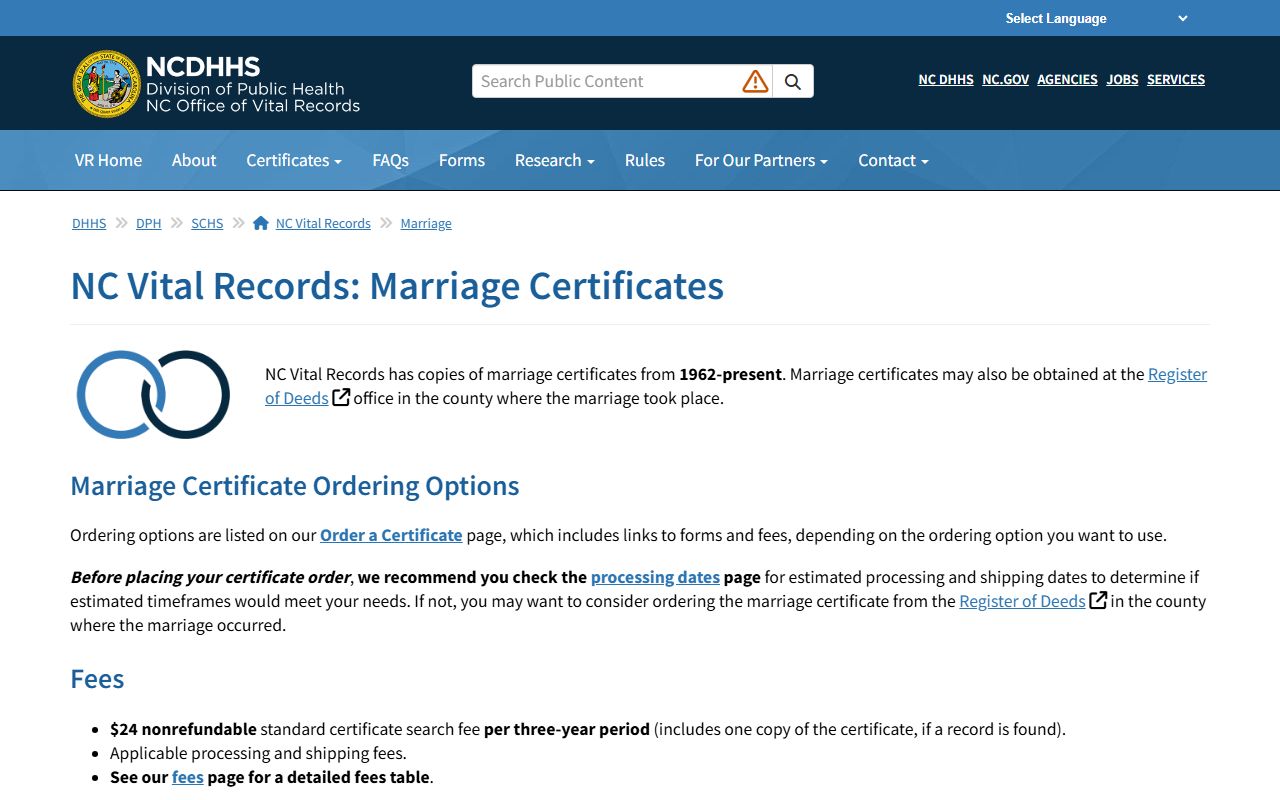
Marriage proof may support a probate issue, but the estate case itself remains with the Clerk of Superior Court.
The NC Vital Records ordering page is the state certificate order channel, separate from Hoke County probate copies.
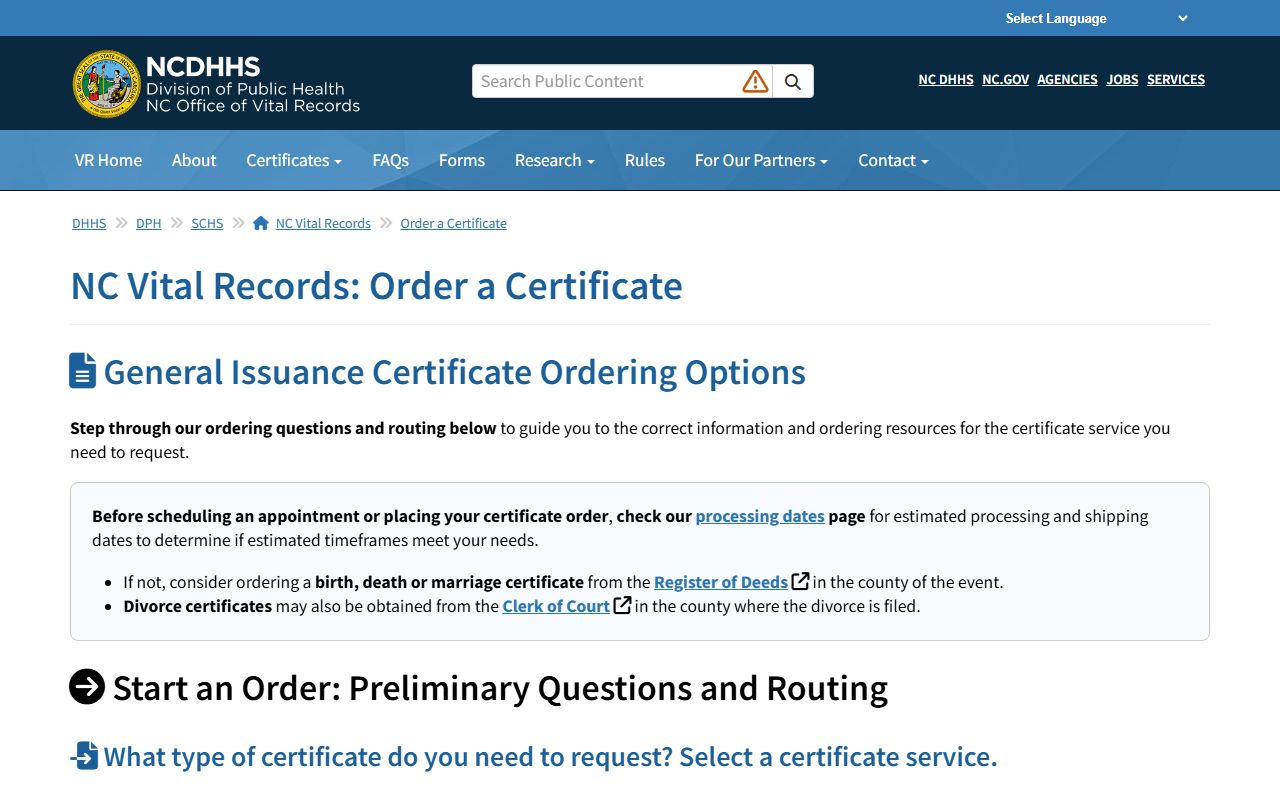
Using the correct office prevents delays when one transaction needs both vital-record proof and probate authority.